Search
Psychology BSc (Hons)
Study level: Undergraduate
Unlock the secrets of human behaviour, explore contemporary psychology issues and develop practical skills for an impactful career in psychology and beyond.
Course option
Year of entry
Location
Coventry University (Coventry)
Study mode
Full-time
Sandwich
Duration
3 years full-time
4 years sandwich
UCAS codes
C800
Start date
September 2026
November 2026
January 2027
March 2027
May 2027
July 2027
Course overview
- Build your expertise in psychology
Understand human behaviour, mental health, and neuropsychology with our British Psychological Society (BPS) accredited course. You’ll learn through applied, career-focused projects and research-led teaching designed to prepare you for roles in healthcare, research, business, and beyond. - Explore contemporary topics
Trace psychology’s journey from its early roots to modern areas like diversity and cyberpsychology. Discover how the brain works, how its connections shape our thoughts, and how people behave as individuals and in society. - Develop research and analytical skills
Gain experience in ethical practice, research design, data collection, and analysis. Apply these skills to projects that match your interests and prepare you for professional practice. - Your career starts here
This BPS-accredited course is your first step towards becoming a psychologist. Progress to specialist areas like clinical, counselling, forensic, educational, or sport psychology – or explore careers in marketing, HR, AI, or computing.
Why choose a BPS-accredited course?
- High-quality curriculum covering psychological theory, research methods and ethics.
- Graduate Basis for Chartered Membership (GBC) — essential for becoming a chartered psychologist.
- International recognition for global career and study opportunities.
- Access BPS student membership, including resources, journals and events (costs apply).

Rated Gold Overall
Teaching Excellence Framework (TEF) 2023
5 QS Stars for Teaching and Facilities
QS Stars University Ratings
Top 5 Student City in England (Coventry)
QS Best Student Cities Index 2026Why you should study this course
- Professional accreditation1: kickstart your career with eligibility for the Graduate Basis for Chartered Membership of the British Psychological Society (BPS), necessary for further postgraduate study. See the accreditation section for more information on requirements.
- Trending topics in psychology: explore issues shaping the societal landscape, such as artificial intelligence, gender and contemporary psychological interventions.
- Specialist real-world facilities: access psychology-specific software and facilities such as an observation suite, multisensory labs and VR headsets, mirroring professional environments and supporting employability.4
- Psychology in action: through problem-based learning, actively engage in real-world, meaningful projects and put your learning into practice with an optional placement year.
- Industry and community connections: learn from experienced professionals and researchers with strong links to schools, NHS trusts and community organisations which could provide placement, research and volunteering opportunities.2
Accreditation and professional recognition

The British Psychological Society
This course is accredited1 by the British Psychological Society (BPS) on an open-ended basis, subject to regular and ongoing review by the BPS. Accreditation by the British Psychological Society means that as a graduate, provided you achieve at least a 2:2, you will be eligible for the Graduate Basis for Chartered Membership (GBC). Additional costs may apply. Please check with the membership body for details.
If the accreditation of this course changes, we will seek to notify applicants and students as soon as possible.
What you'll study
We regularly review our course content, to make it relevant and current for the benefit of our students. For these reasons, course modules may be updated.
Hear from our students
Find out more about studying Psychology at Coventry University.
How you'll learn
Learn through hands-on activities and real-world examples, using the same approaches professionals use in the field. It’s about creating experiences that allow you to apply knowledge, gain confidence, and feel prepared for your future career.
Teaching methods may include:
- interactive, engaging lectures that help to make learning psychology relatable and relevant
- workshops and seminars where you will collaborate, debate and problem solve, exploring content in more depth
- regular ‘course hours’ that will allow you to meet your lecturers and course director and build a sense of community within your subject area while engaging in immersive subject-specific content
- case studies and simulated scenarios that allow you to apply your learning.
Teaching contact hours
As a full-time undergraduate student, you will study modules totalling 120 credits each academic year. You will normally study one 30-credit module at a time. A typical 30-credit module requires a total of 300 hours of study made up of teaching contact hours, guided and independent study.
Teaching hours
Teaching hours may vary depending on your year of study and selected modules. During your first year, you can expect 12-15 teaching hours each week. You will also have the option to attend additional sessions, including time with a progress coach or to meet with staff for advice and feedback. As you progress through your studies, teaching hours may reduce.
Guided and independent study
Throughout your studies, you will be expected to spend time in guided and independent study to make up the required study hours per module. You’ll be digging deeper into topics, review what you’ve learned and complete assignments. This can be completed around your personal commitments. As you progress through your studies, you’ll spend more time in independent study.
Online learning
As an innovative university, we use different teaching methods including online tools and emerging technologies. So, some of your teaching hours and assessments may be delivered online.
Assessment
This course incorporates new and innovative assessment methods aligned with current industry standards, providing you with practical, real-world skills designed to advance your professional readiness and career prospects.
Assessment methods may include:
- written work such as essays and practical reports
- phase tests
- reflective journals
- individual and group presentations
- problem-solving scenarios such as case studies
- posters and public information leaflets
- podcasts, VLOGs and other media projects.
The Coventry University Group assessment strategy ensures that our courses are fairly assessed and allows us to monitor student progression towards achieving the intended learning outcomes.
International experience opportunities
You have the opportunity to complete the course over four years with a year spent studying abroad2. The university has links with over 20 institutions in Cyprus, France, Malta, Spain, Sweden and Turkey, as well as several other countries around the world. Courses are largely taught in English, but there are opportunities to learn and attend courses in a foreign language.
You may also have the opportunity to present at international conferences and/or collaborate with students from other institutions within the international arena on specified COIL (Collaborative Online International Learning) projects (subject to availability).
Please note that all international experience opportunities may be subject to additional costs, competitive application, availability, and meeting applicable visa and travel requirements, and are therefore not guaranteed2.
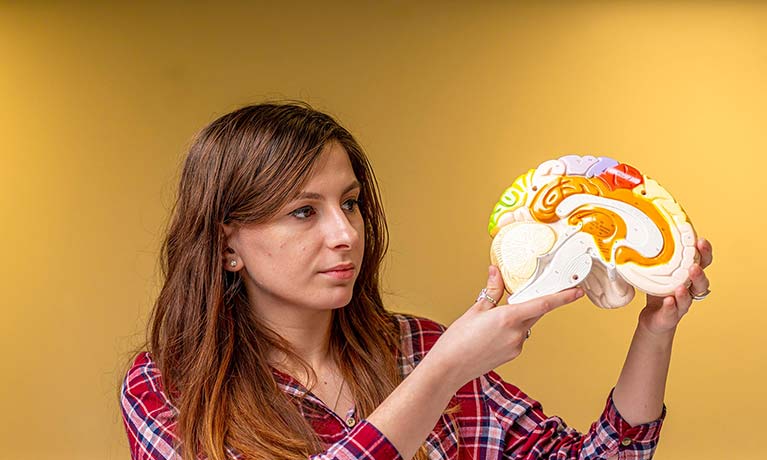
The course is suited to you if you wish to think “outside of the box”, understand the why and how of human behaviours, investigating people’s thoughts, feelings and behaviours using psychological theories and methodologies. This understanding is underpinned by an exploration of psychological theory, research and practical skills, such as quantitative and qualitative data collection, analysis and interpretation.
Dr Rachael Molitor, Lecturer in Psychology, Coventry University (2025)
Entry requirements
Typical entry requirements:
Not got the required grades? We offer this degree with an integrated foundation year.
Fees and funding
| Student | Full-time | Part-time |
|---|---|---|
| UK, Ireland*, Channel Islands or Isle of Man | 2026/27 fees TBC 2025/26 fees: £9,535 per year |
Not available |
| EU | 2026/27 fees TBC 2025/26 fees: £9,535 per year with EU Support Bursary** 2026/27 fees TBC 2025/26 fees: £18,300 per year without EU Support Bursary** |
Not available |
| International | 2026/27 fees TBC 2025/26 fees: £18,300 per year |
Not available |
If you choose to study this course with a professional placement2 or study abroad year, you will need to pay a tuition fee3 to cover your academic support throughout your placement year. Students commencing their professional placement in the academic year 2027/28 will pay £1,500 if they are paying UK fees, or £1,800 if they are paying international fees.
For advice and guidance on tuition fees and student loans visit our Undergraduate Finance page and see The University’s Tuition Fee and Refund Terms and Conditions.
The University will charge the tuition fees that are stated in the above table for the first Academic Year of study. The University will review tuition fees each year. For UK (home) students, if Parliament permits an increase in tuition fees, the university may increase fees for each subsequent year of study in line with any such changes. Note that any increase is expected to be in line with inflation.
If you choose to study this course with a professional placement, the University will charge the tuition fees stated above for those on a placement during Academic Year 2027/28. The University will review professional placement tuition fees each year. For UK (home) students, the University may increase fees for each subsequent year of study, but such that it will be no more than 5% above inflation.
For international students, we may increase fees each year, but such increases will be no more than 5% above inflation. If you defer your course start date or have to extend your studies beyond the normal duration of the course (e.g. to repeat a year or resit examinations) the University reserves the right to charge you fees at a higher rate and/or in accordance with any legislative changes during the additional period of study.
We offer a range of International scholarships to students all over the world. For more information, visit our International Scholarships page.
Tuition fees cover the cost of your teaching, assessments, facilities and support services. There may be additional costs not covered by this fee such as accommodation and living costs, recommended reading books, stationery, printing and re-assessments should you need them. Find out what's included in your tuition costs.
The following are additional costs not included in the tuition fees:
- Any optional overseas field trips or visits: £400+ per trip.
- Any costs associated with securing, attending or completing a placement (whether in the UK or abroad).
*Irish student fees
The rights of Irish residents to study in the UK are preserved under the Common Travel Area arrangement. If you are an Irish student and meet the residency criteria, you can study in England, pay the same level of tuition fees as English students and utilise the Tuition Fee Loan.
**EU Support Bursary
Following the UK's exit from the European Union, we are offering financial support to all eligible EU students who wish to study an undergraduate or a postgraduate degree with us full-time. This bursary will be used to offset the cost of your tuition fees to bring them in line with that of UK students. Students studying a degree with a foundation year with us are not eligible for the bursary.
How do you know if you need to pay UK or international tuition fees?
Facilities
This course is taught at Coventry University’s main campus.
- Specialist teaching facilities4 include light and dark multisensory laboratories, ‘mock’ prison cells, an observation suite, counselling rooms which allow you to experience the application of psychology in different contexts.
- Specialist software, such as Gorilla, Opensesame experiment builder, E-Prime, SPSS statistical analysis, Pinnacle Studio and NVIVO allow you to develop your digital fluency.
- EEG (electroencephalogram), eye tracking and virtual reality headsets allow you to understand and experience the neurocognitive aspects of human behaviour in different situations.
Facilities are subject to availability. Access to some facilities (including some teaching and learning spaces) may vary from those advertised and/or may have reduced availability or restrictions where the university is following public authority guidance, decisions or orders.
Careers and opportunities
Our Psychology degree unlocks pathways to careers that make a real difference in people’s lives. After completing your degree, you could choose to specialise and train as a qualified psychologist in areas such as:
- occupational, forensic or social psychology – shaping workplaces, justice systems and communities
- clinical or counselling psychology – supporting mental health and wellbeing
- health, sport or neuropsychology – improving physical health and performance
- developmental and educational psychology - working with children and young people.
Qualifying as a specialist psychologist may involve additional training and requirements. For details, please visit the BPS website.
Your skills in understanding behaviour and data can lead to roles such as:
- Researcher
- Corporate wellbeing consultant
- Teacher
- Psychologist
- Advertising consultant
- NHS roles
- Human resources officer
- Police analyst
- Advocacy officer
- Data analyst.
These examples show the breadth of opportunities available. Some roles may require extra qualifications, professional examinations, practical experience or training. You might also need to cover related costs and meet specific visa or immigration requirements, depending on your chosen career and location.
Where our graduates work
Successful graduates from this course have built careers with organisations such as:
- NHS
- Victim Support
- St Andrew’s Healthcare.
Many of our graduates choose to continue their journey through postgraduate study (e.g., MSc, PhD, DClinPsy) and progress into specialist roles such as clinical, forensic, sport, educational psychologists.
Other graduates have secured employment in applied and research institutions or moved into roles that use psychology in innovative ways such as teaching assistants, working in human resources, research assistants and using their digital literacy skills to support meaningful interventions in hospitals and start-up companies looking for innovative thinking.
Further study
If you graduate with a minimum 2:2 on your Psychology BSc (Hons) degree you’ll normally be eligible for postgraduate master’s courses at Coventry University, such as:
- Applied Psychology MSc
- Business and Organisational Psychology MSc
- Forensic Psychology MSc
- Forensic Psychology and Mental Health MSc
- Health Psychology MSc
- Psychology MSc
- Sport and Exercise Psychology MSc
Please check individual course pages for details.

An expert's guide to beating the Faithful
Lecturer in Psychology Dr Rachael Molitor spoke to the BBC about key tactics participants on the Traitors TV show can use, such as understanding your own personality, halo effects and how to spot a Traitor.
Read more
Discover Phoenix+
Phoenix+ brings you together with other students to learn, experience and develop essential knowledge and skills. Whatever destination you choose, it's about preparing you for life after university.
Learn more about Phoenix+How to apply
UK students
International students
Disclaimers
You may also like

Coventry University (Coventry)
Forensic Psychology BSc (Hons)
Coventry University (Coventry)

Psychology with Sport and Exercise BSc (Hons)
Coventry University (Coventry)